


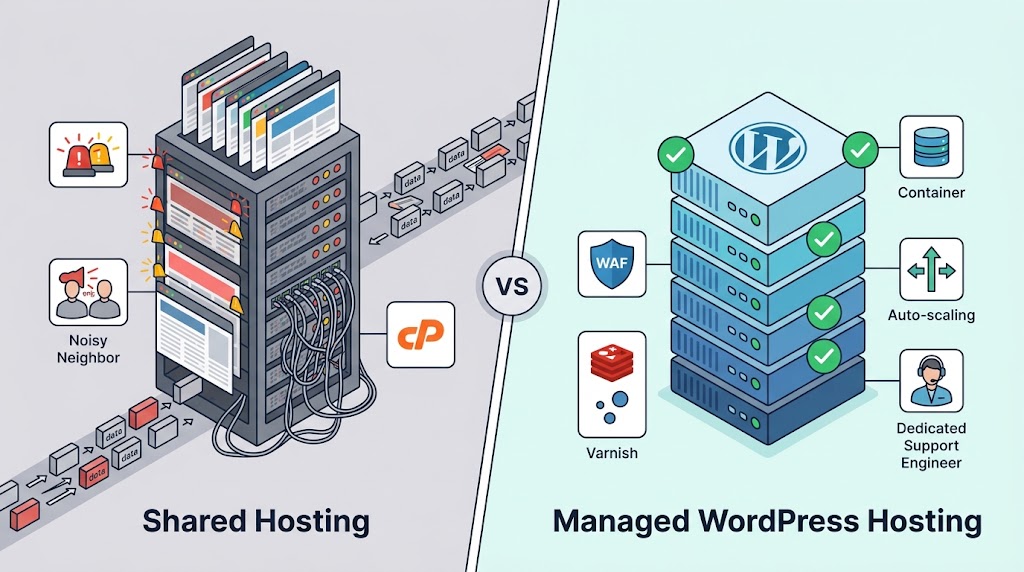
“Managed WordPress Hosting” is a buzzword that many agencies and business owners dismiss as marketing fluff. But when you understand what true managed hosting really delivers, the value proposition becomes clear.
🤔 The Misconception
“For many agency owners, ‘Managed WordPress Hosting’ has become a loaded term. It is frequently dismissed as marketing shorthand for ‘shared hosting with a higher price tag’ or viewed as a restrictive environment where you pay a premium to lose root access”.
This skepticism isn’t unfounded—the market is saturated with providers slapping “Managed” labels on standard cPanel environments, offering little more than automated plugin updates. However, true managed hosting is something fundamentally different.
🔑 What Makes True Managed WordPress Hosting?
1. DevOps as a Service
The Misconception: “Real developers need root access. Managed hosting restricts us, so we’re better off spinning up our own VPS.”
The Reality: Agencies often confuse access with capability. While having root access feels like freedom, it actually shackles your most expensive talent to low-value maintenance tasks”.
What You Get:
- Git integration
- SSH access
- WP-CLI installed
- One-click staging environments
- Server-level caching (Redis, Varnish)
The Value: Every hour your lead developer spends configuring Nginx rules, debugging PHP-FPM pools, or patching OS-level vulnerabilities is an hour they are not billing for custom development.
2. Elasticity and Architecture, Not Just Hardware
“Many agencies believe that ‘managed’ hosting simply means renting a specific slice of hardware. However, true managed hosting is about elasticity and architecture, not just raw specs”.
| Aspect | Basic Hosting | True Managed Hosting |
|---|---|---|
| Approach | Add more RAM | Optimize PHP concurrency |
| Caching | Basic page caching | Edge-level caching + Redis |
| Scalability | Upgrade server | Elastic, containerized scaling |
| Traffic Spikes | Server often fails | Proactive load balancing |
3. Security at Infrastructure Level
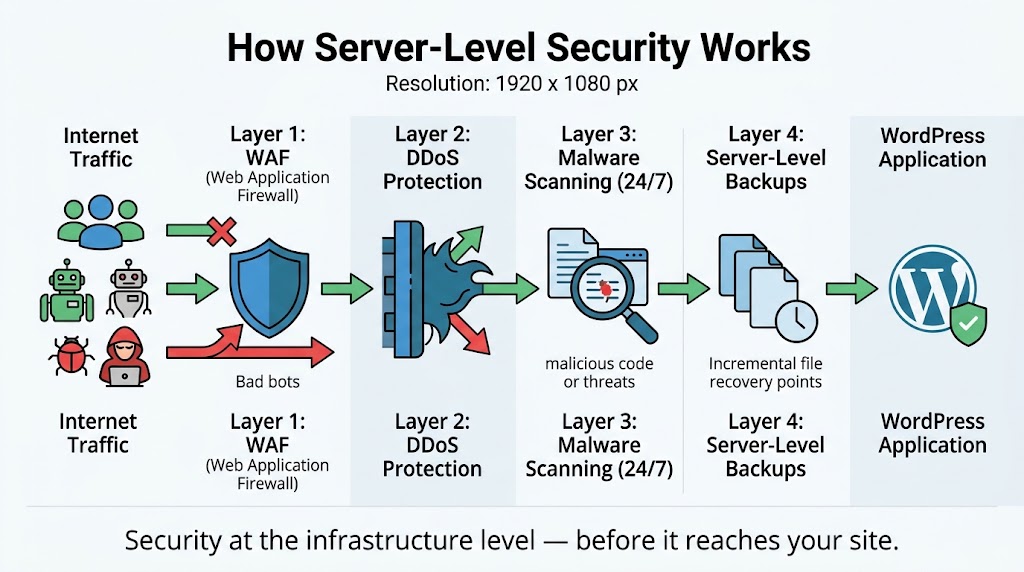
“We have a security plugin and a backup plugin. We don’t need the host to do that. What agencies often miss is that true managed hosting moves these critical functions to the server level”.
Server-Level Security:
- WAF (Web Application Firewall): Blocks bad bots before they hit your WordPress installation
- Server-Level Backups: Instant, incremental backups that don’t bloat your database
- Malware Monitoring: 24/7 scanning at the server level, not just application level
Why It Matters: Relying on application-level plugins for security and backups forces the application to run those scripts, which slows down performance.
4. Support That Actually Helps
“A managed host is not a substitute for your development team. However, the quality of the conversation changes drastically with a premium provider. With a budget host, support follows a script. With a premium managed partner, you are often speaking to an engineer who can help you identify why your custom query is slow”.
Real Support Example:
- You report “site is slow”
- Basic host: “Clear your cache” (useless advice)
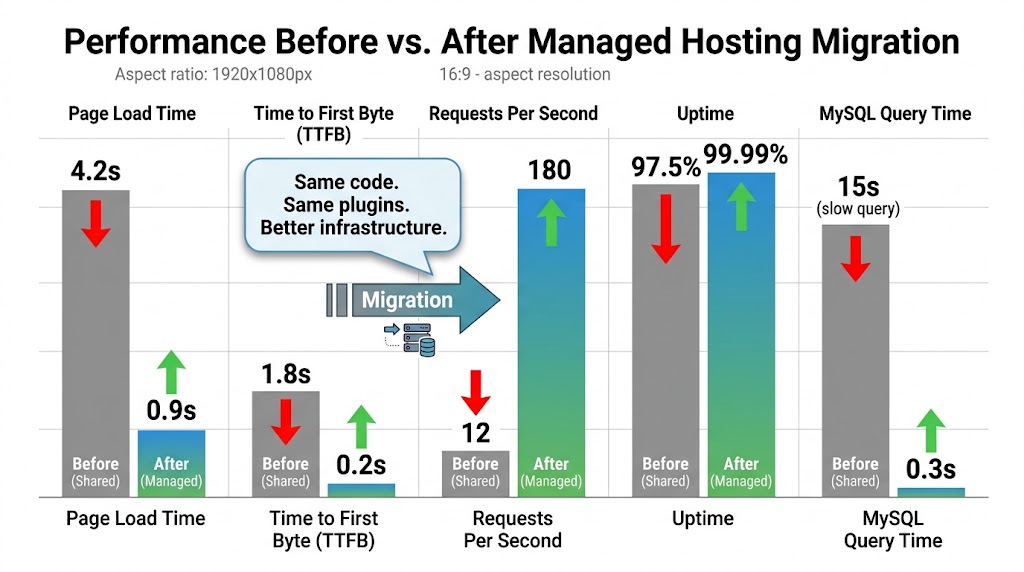
- Managed host: “Your MySQL slow query log shows this custom query is taking 15 seconds. Here’s why. We can’t rewrite it for you, but here’s the data your developer needs to fix it.”
🏢 What Top-Tier Agencies Get Right
“If your agency is managing its own servers, you are essentially running a hosting company inside your agency, likely with lower margins and higher liability. True managed WordPress hosting allows your agency to decouple revenue from anxiety, ensuring that as you scale your client list, you aren’t scaling your technical debt”.
The Agency Math:
Without Managed Hosting:
- Server engineer: $100,000/year
- Security specialist: $90,000/year
- Maintenance time: 20 hours/week
- Total: >$250,000/year + liability

With Managed Hosting:
- Hosting cost: $1,000/month per client
- Engineer time: 2 hours/week for monitoring
- Total: Dramatically lower + reduced liability
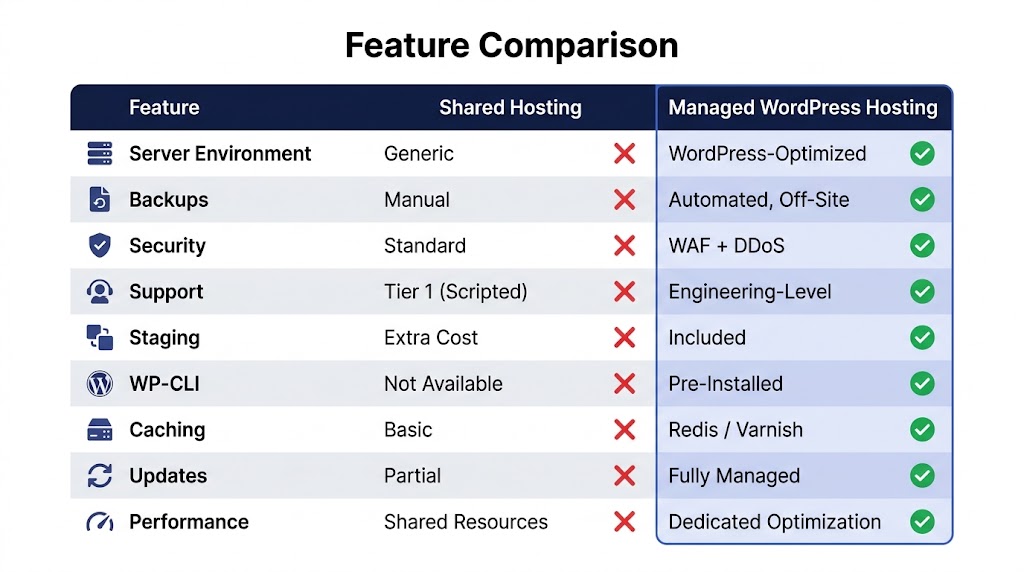
🔄 Managed vs. Shared Hosting: What You Actually Get
🎯 Why Cyber Mickey Recommends Managed Hosting
Cyber Mickey offers managed WordPress hosting because:
- We focus on development, not server maintenance. “Stop paying senior developers to be part-time sysadmins”.
- Your site stays secure. Server-level WAF blocks threats before they reach your application.
- Performance is guaranteed. We optimize PHP concurrency, caching, and server configuration for your specific site.
- You get support that matters. When something goes wrong, you’re not talking to someone reading a script.
Recent Post

WP-CLI: 15 Commands Every WordPress Developer Should Know

10 Essential WordPress Design Plugins for a Modern.

From Figma to WordPress: A Designer’s Handoff Checklist

Accessibility in WordPress Design: Your Ethical and Legal.

